
Moscow Exchange announces start date for cryptocurrency trading
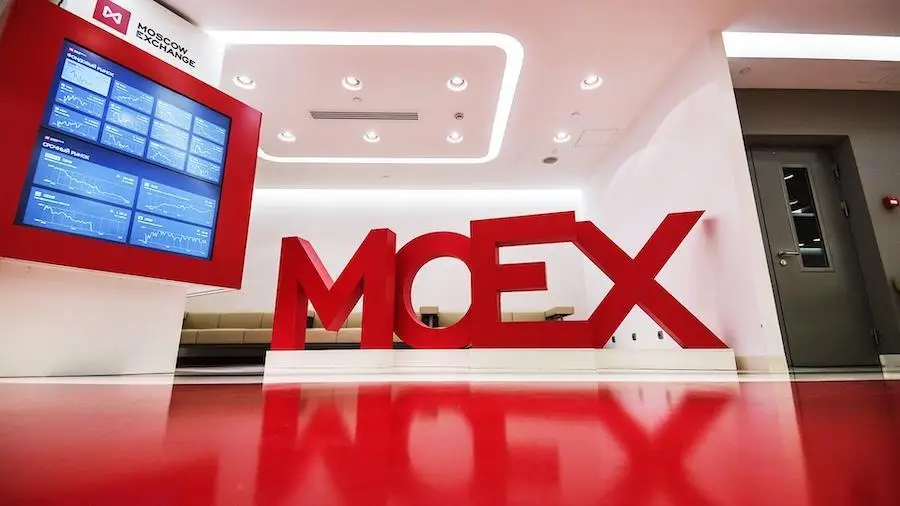
The Moscow Exchange is ready to launch cryptocurrency trading on December 1, stated Sergey Shvetsov, Chairman of the Supervisory Board of Russia’s largest stock exchange. However, the executive noted that the launch would proceed only if the "entire regulatory framework" is ready. Shvetsov recalled the "not-so-successful" experience of launching trading in foreign stocks denominated in rubles; consequently, the decision was made this time to use "quasi-dollar quotes"—where the instrument's price is denominated in dollars, but settlements are made in rubles. "The key aspect is that we intend to conduct this within a unified clearing system—that is, in a way that is convenient for participants. Trading itself will take place in both quasi-dollars and rubles. We are, of course, referring to foreign digital financial instruments. As for local digital instruments, they will be ruble-denominated," Shvetsov clarified. Shvetsov is concerned about potential liquidity issues arising from a fragmented pool—a consequence of the government law on cryptocurrency trading that has been in effect since September. Exchanges acting as market makers will be able to connect to both foreign and Russian exchanges, channeling foreign liquidity into the Russian order book. Shvetsov believes that if multiple fragmented liquidity centers emerge instead of a unified market, the total volume will fail to materialize. "Why did we lose to the Mongol-Tatars? Because every principality wished failure upon its neighbors. If we create 12, 14, or 25 liquidity centers within various exchanges, we won't have any liquidity," Shvetsov said. Legally, only Bitcoin, Ether, and USDT stablecoins can be traded in Russia. On September 22, the Moscow Exchange plans to launch trading in perpetual futures contracts based on indices of five cryptocurrencies: Bitcoin, Ether, Solana, Ripple, and TRON. The new instruments are available only to professional investors. However, under the law, non-qualified investors will also be able to trade the cryptocurrency itself, albeit subject to an annual limit of 300,000 rubles per intermediary. Vladislav Kochetkov, Chairman of the Management Board at Finam, suggested that due to this restriction—which is technically difficult to monitor—brokers might choose not to grant non-professionals access to trading at all.